

Anyone for Elderflower Cordial?
....plus recipes for elderflower fritters and a 1950's recipe for elderflower wine

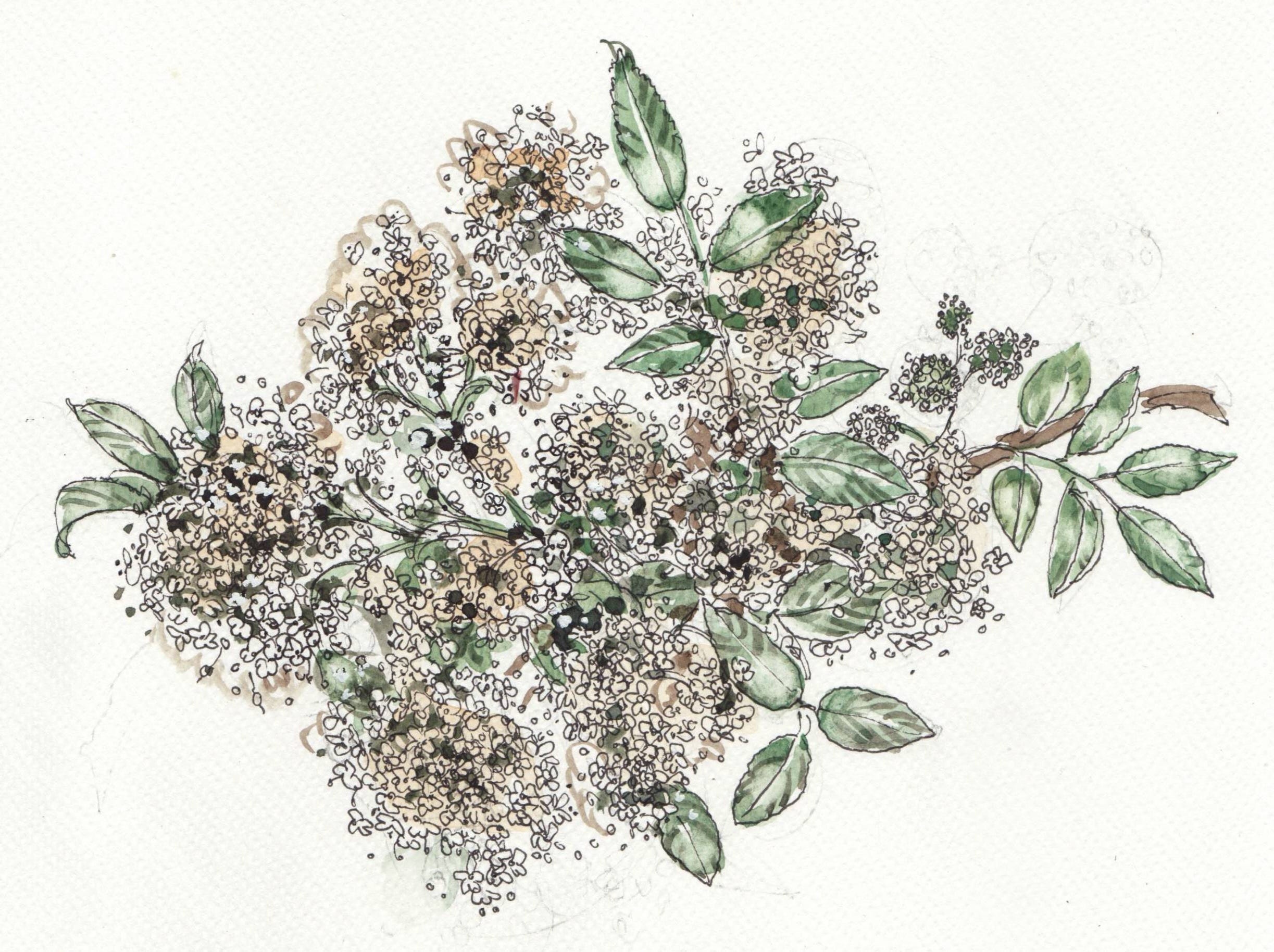
Take elderflowers, for instance. They’re free and there’s absolutely no danger of over-picking. The season is already in full swing where I now live in West London rather than in the wilds of Wales, where the season is probably still a month away. My own urban gathering-grounds (identified under Covid - never ignore a silver lining) include a municipal wasteland where underground tunnels meet, a bridge over a disused railway line, the edges of a school recreation ground, and everywhere else that overspills on pavements and can be considered forage for free.
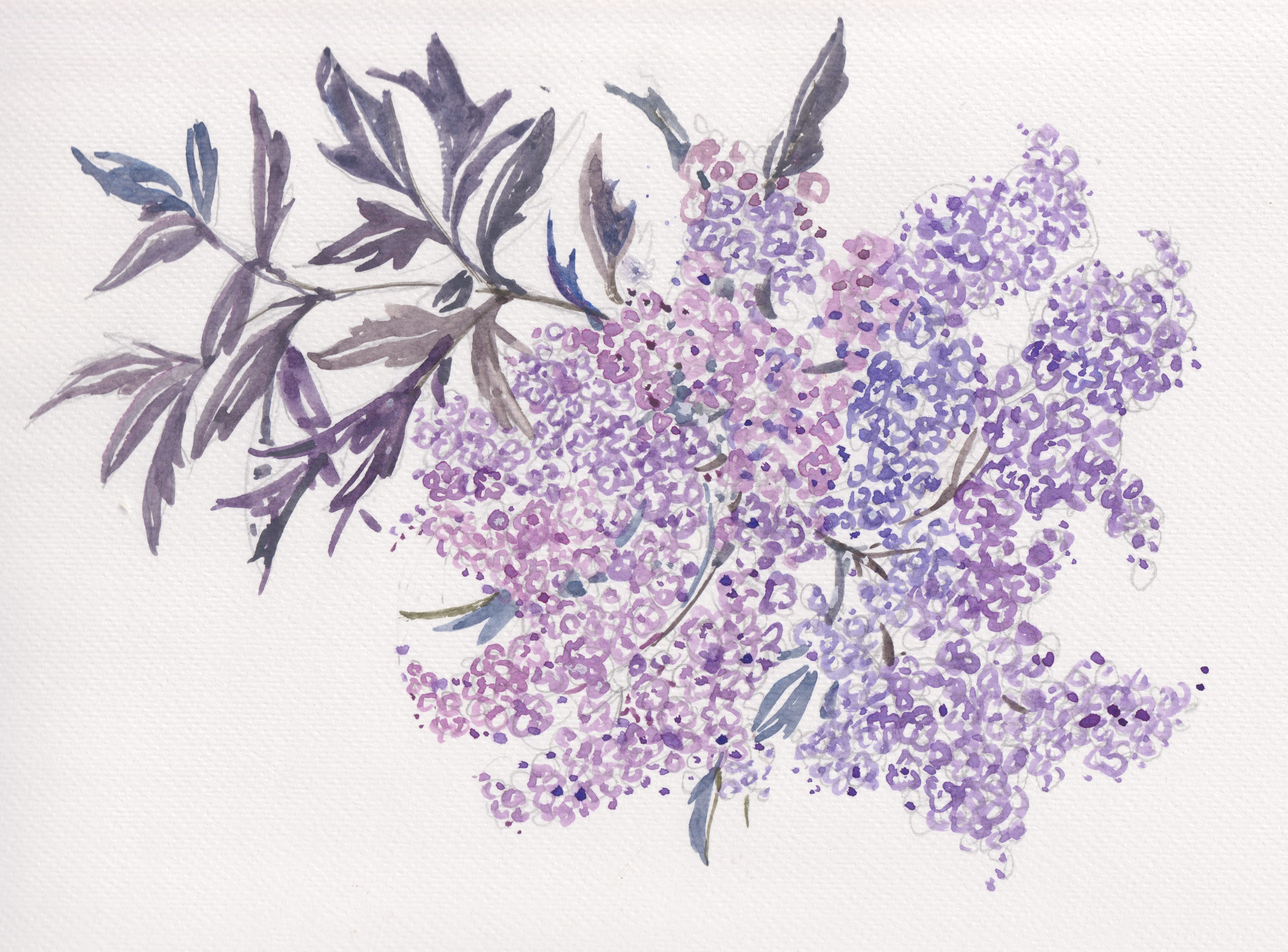
There’s no mistaking the frothy disks of delicate little blossoms, pure white to a deep purple, that open on short stalks and tip their faces to the sun from mid-May to the end of June. Sambucus nigra, the common or garden variety in Britain and most of Europe, establishes itself wherever it can find itself a home in hedgrows, gardens, edges of woodland, borders of motorways and roadsides. Some twenty Sambucus species - all of which are edible though not all are seen as such - are widely distributed throughout the temperate lands of Europe, Asia and the Americas.
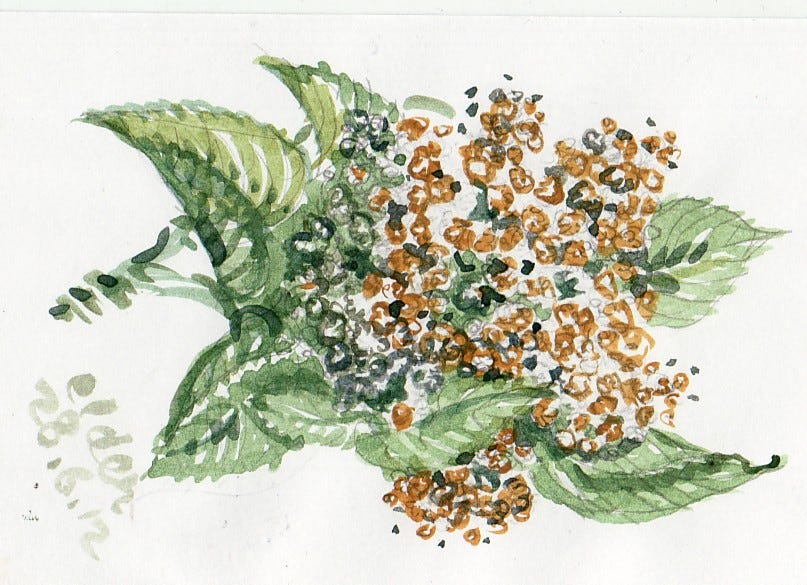
As the blossoms lose their petals, the flowerheads turn downwards and develop into small, shiny, deep purple berries much loved by birds and as an ingredient in Britain in hedgerow jellies - blackberry, bird-cherry, rose-hip - and as a soothing medicinal syrup (laxative, be warned). On visit to a wine-region in Austria, a compote of elderberries, apples and plums spiced with cinnamon was to be eaten with fresh cream cheese. And in Portugal, there was discreet mention, during a tasting the year’s vintage, that the elderberry trees planted at the end of rows of vines on the steep slopes of the Douro were used (in the old days, naturally) to darken the wine shipped downriver to Porto for cellaring and fortifying to be shipped to the English market, where they liked their port-wine ruby-red. Fancy that. Pass the port to the left, your lordship, so you can keep your sword-arm free.
Elderflower Cordial
Pick the blossom-heads on a dry day. Shake out any little bugs, but don’t rinse. The whole head can be included - no need to strip the flowers from the stalks.
Yields about a litre
About 2 dozen elderflower blossom-heads on stalks, no leaves
2 unwaxed or well-scrubbed lemons
250g granulated sugar
Place the blossom-heads in a large bowl and cover with a litre of boiling water. Juice the lemons, reserve the juice and pop the empty shells in the bowl with the elderflowers. Leave to infuse till cool.
Meanwhile, dissolve the sugar in its own volume of boiling water. Strain out the blossoms, stir in the lemon juice and sugar-syrup. Bottle and cork firmly. Keep in the fridge and use within a month. For a longer shelf-life, substitute citric acid for the lemon-juice. Dilute to taste and serve well iced. As a winter cordial, flavour with cinnamon and clove and dilute with boiling water.
Elderflower fritters
Pick the flowerheads on a dry day and shake thoroughly, as above. Don’t rinse.
Serves 4-6
2-3 flower-heads, divided into small bunches
1 large egg, separated
125g plain flour
300ml fizzy water (or beer)
a light, flavourless seed-oil for frying
Icing sugar for dredging
Lay the flowerheads out on a damp cloth ready for the fryer. Whisk the egg white till light and fluffy, stopping before the mixture goes grainy, and reserve. Sieve the flour into a bowl and make a well in the middle. Blend the yolk with the water and work the mixture into the flour gradually until you have a smooth cream which will coat the back of a wooden spoon. Use a metal spoon to fold in the whisked egg-white.
Heat enough oil to float the fritters - about 2-fingers depth - in a roomy frying-pan till a faint blue haze rises. Test by dropping a cube of bread into the oil, which should immediately form bubbles round the edge and begin to brown the crumb.
Flip the flower-sprigs one at a time through the batter, shaking to remove excess, and drop straight into the hot oil, adding more bunches than will cover the surface. Use a draining spoon to flip each fritter over as soon as it browns. Remove with a draining spoon and transfer to kitchen paper to drain. If the oil temperature drops below bubble-forming point, the fritters will be soggy; if the heat’s too high the batter will burn. Continue till all are done. , and serve immediately - flower fritters wait for no man.
Traditional Elder Flower Wine
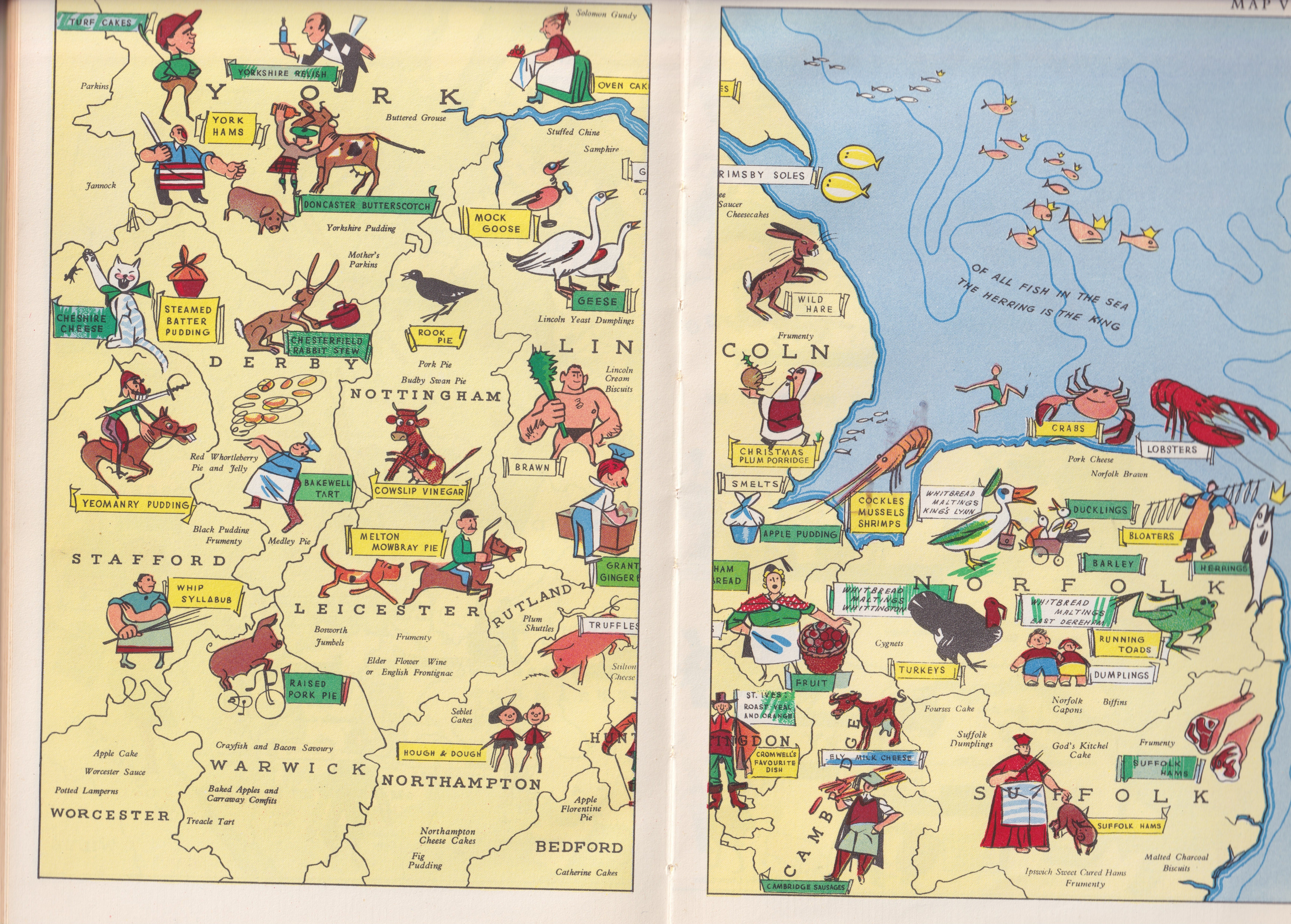
A recipe for the most beloved of English hedgerow wines attributed to the county of Leicestershire - heart of Old England, wheat and dairy country, rich in hedgerows and woodlands and parts of Sherwood Forest. Published in 1950, when sugar came off post-war rationing, in Receipts & Relishes, a compendium of regional British cooking by Bernard Darwin, a popular writer on golf (which presumably got him round and about). Home-winemakers - you’re on your own as I haven’t tested the recipe, which is why I’ve included in italics. No instructions are given as to length of cellaring, though I remember as a child that care had to be taken when uncorking elderflower champagne (exciting!) for fear of losing an eye. Judging by quantities, I’d expect three dozen bottles - enough for a country wedding.
6 eggs (whites only)
6 gallons water
1/2 peck elderflowers (1 gallon)
4 lemons
16 lbs lump-sugar
8 pints raisins
1/2 pint yeast or 1 oz compressed yeast
Beat the whites of eggs till stiff. Put on to boil with water and sugar and skim well. Add the raisins, which should be stoned and chopped, and lastly the elder flowers. When the liquid has cooled down, stir in the yeast. Put the juice and finely-cut rind in the next day. Let it ferment in an open crock, but cover with a cloth. Strain and put the wine in cask or bottles after 3 daysp.s.
Beloved paid-subscribers will shortly be in receipt of with Richard Mabey’s elderflower frittata and a Sicilian elderflower semi-freddo.
Wonderful! My country road here in Northern California is bordered with massive elderberry bushes in full bloom at the moment. I have 5 quarts of elderflower cordial in my refrigerator made by my co-author. We're serving it, along with wine, at our book launch party. I'm going to try the fritters!
I make the syrup yearly. In Italy, the Hugo spritz is a summer favorite. Elder flower syrup or liqueur, Prosecco, soda, lemon slice and mint sprig.